Irish Pub NYC Recommendations for a Memorable Night
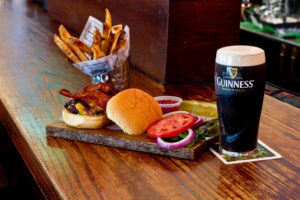
New York does not lack for bars, and that is precisely why finding the right Irish pub matters. The phrase Irish Pub NYC gets thrown around loosely, often applied to any dark-wood room that pours Guinness and hangs a few old county signs behind the bar. But the best places offer something more specific. They have rhythm. They know how to handle a crowd before a Rangers game, how to keep the pints moving on a Friday at 7:30, and how to create the kind of easy atmosphere where one drink turns into three and nobody seems to mind.
A memorable night at an Irish pub in New York can take different forms. It might mean live trad music in a room where half the crowd appears to know the chorus. It might mean a perfectly kept pint and a plate of shepherd’s pie after a long walk through Midtown. It might mean slipping into a neighborhood spot in the Village https://medium.com/@hiberniabar1/about where the bartenders are quick, the conversation is better than the playlist, and the room still feels grounded in something older than the city outside. What makes these places worth recommending is not simply authenticity as a design choice. It is how they function, how they welcome, and how they hold up over the course of an actual night out.
What separates a good Irish pub from a forgettable one
The first tell is the bar itself. In a serious pub, the bar is built for service. That sounds obvious, but in New York, where many places prioritize layout over flow, it matters. If ordering a round takes fifteen minutes and the stout arrives foamy, flat, or overheated, the mood drops fast. A proper Irish pub understands throughput. Bartenders know how to pour Guinness without rushing it. They know regulars by face, if not by name. Glassware is clean, taps are looked after, and the room never feels like it is pretending to be somewhere else.
The second tell is sound. Not volume, but texture. A strong pub has conversation in the air, the clink of glasses, maybe a football match on without every eye glued to the screen. Music should support the room, not dominate it. Some places get this wrong by treating the pub like a sports bar at noon and a club by 10 p.m. The better houses maintain identity throughout the night. They can absorb groups, dates, solo drinkers, office spillover, and tourists without becoming chaotic.
Food matters more than many people admit. Nobody expects fine dining from an Irish pub, but there is a real difference between freezer-fried filler and a kitchen that respects the classics. A reliable burger, solid fish and chips, a deeply savory stew, crisp chips with curry sauce, even a well-made toastie, these things change the shape of an evening. Especially in New York, where plans drift and nights stretch, the pubs that feed people properly tend to earn loyalty.
The neighborhoods where the night changes character
A night in an Irish pub in Midtown feels different from one in the East Village, the Financial District, or Woodside. That distinction is worth keeping in mind before choosing a destination, because the same person can have a great time in all four places for completely different reasons.
Midtown is built for convenience and scale. You go there when meeting colleagues after work, before a train, before or after a show, or when you need a room that can handle mixed company without anyone overthinking the venue. The trade-off is obvious. Some Midtown pubs can feel transactional, especially near major transit hubs. But the stronger ones compensate with speed, polish, and enough warmth to keep the setting from feeling anonymous.
Downtown, especially the Village and parts of Lower Manhattan, tends to reward wandering. The pubs there often feel more embedded in neighborhood life. They attract regulars, industry people, and locals who are not simply passing through. That makes for better lingering, better conversation, and a better chance of the night developing organically.
Queens deserves more attention than it gets in this category. Woodside and nearby areas have long-standing Irish ties, and the pub culture there often feels less performative. These are places where a session can break out naturally, where sports chatter feels rooted, and where the room is less curated for visitors. If you care about atmosphere more than a Manhattan zip code, this is often where the evening gets interesting.
The Financial District sits somewhere in between. On weekdays, it can be all momentum and shoulder-to-shoulder crowds. On weekends, parts of it empty out and certain pubs become surprisingly relaxed. Timing is everything there.
A few places that consistently deliver
No single list can settle the question of the best Irish Pub NYC experience, because mood and geography count for a lot. Still, a handful of places stand out for clear reasons and hold up beyond first impressions.
- McSorley’s Old Ale House, East Village. Not an Irish pub in the polished modern sense, but essential for history, character, and one of the most singular bar rooms in the city. You go for atmosphere, old wood, sawdust lore, and the peculiar pleasure of ordering only light or dark ale.
- The Dead Rabbit, Financial District. More ambitious than a standard pub and deservedly famous for its bar program, but still worth mentioning because it understands hospitality and Irish identity better than most places trading on the theme.
- Molly’s, Gramercy area. A classic choice when you want warmth, strong pours, and that hard-to-fake feeling of having landed somewhere established rather than styled.
- Donovan’s Pub, Woodside. Slightly outside the Manhattan-centered conversation, but a great argument for making the trip. Known for its burger, beloved by locals, and far more grounded than trend-driven spots.
- The Landmark Tavern, Hell’s Kitchen. Historic, handsome, and especially good if you want a pre-theater or late-evening stop that feels substantial rather than generic.
That list is not trying to be exhaustive, and each comes with caveats. McSorley’s is famous enough that peak hours can test your patience. The Dead Rabbit can draw a crowd that is there as much for reputation as for the room itself. Molly’s can fill quickly, and its charm is partly tied to accepting that it is not trying to entertain you beyond the basics. Donovan’s rewards intention, because getting there means choosing the pub as the destination, not just the nearest option. The Landmark Tavern can vary with the hour and the event calendar nearby. Yet all of them offer something memorable, which is the real point.
McSorley’s and the value of a place that refuses to modernize
If you care about bar history at all, McSorley’s remains one of those places that can still jolt you out of a routine night. It is crowded, loud, and deeply itself. The floor, the walls, the memorabilia, the narrowness of the room, it all adds up to a space that would feel impossible to invent now. The ale is simple, the service direct, and the atmosphere at peak hour is less about comfort than immersion.
The reason it works is that it never pretends to be delicate. You do not go there for a quiet catch-up, and you do not go expecting a broad drinks menu. You go because very few bars in New York still create the feeling that the room, rather than the brand, is the main event. For visitors, it is often the first answer to the Irish Pub NYC search. For locals, it can still be worth revisiting when you want a night with rough edges and no fuss.
The polished end of the spectrum still has a place
There is sometimes a false divide in these conversations, as if a pub must be either old and unvarnished or slick and somehow inauthentic. That is too simple. New York supports both, and a memorable night can happen in either setting if the fundamentals are handled well.
The Dead Rabbit is a good example. It has built an international reputation, and yes, that changes the crowd. But it also demonstrates what happens when serious drinks, efficient service, and Irish hospitality are treated as compatible rather than opposed. If your idea of a successful evening includes one excellent cocktail before settling into a pint and something substantial to eat, places like this make sense. You trade a little spontaneity for polish, but you gain precision.
This matters for groups too. Not every outing is a two-person pub crawl built around discovery. Sometimes you are organizing colleagues, relatives in town, or a mix of ages and drinking habits. In those cases, a room with structure, a broad menu, and staff who can manage demand without visible strain is often the smarter choice.
Neighborhood pubs still win on feeling
For many people, the ideal Irish pub night is less about destination prestige and more about how naturally the evening unfolds. That is where neighborhood pubs tend to win. The room settles into itself. The bartenders are not performing. The crowd is mixed in a healthy way. Somebody asks what you are having because they actually want to know, not because they are making small talk until their friends arrive.
Molly’s has long appealed for that reason. It has the kind of low-lit comfort that encourages staying put. A cold night in New York, a pint set down on dark wood, a straightforward meal, and no pressure to keep moving, that is a formula that rarely fails. It is not flashy, and it should not be. The best pub evenings often come from resisting the city’s constant urge to optimize every hour.
In Queens, Donovan’s carries some of that same appeal, though with a stronger neighborhood identity. You will hear people talk about the burger, and fairly enough, it is one of the city’s enduring pub-food benchmarks. But the food is only part of the story. The bigger draw is the sense that the place exists for itself and its regulars first, with everyone else invited in on those terms. That tends to produce a sturdier kind of hospitality than bars designed around trend cycles.
When live music improves the night, and when it overwhelms it
Traditional music can transform an Irish pub. It can also flatten conversation if the room is too small or the setup too amplified. The best sessions feel integrated into the pub rather than staged on top of it. There is a difference between musicians in a corner shaping the room’s energy and a venue using “live music” as a marketing line while people shout over speakers.
If live music is your priority, ask a practical question before committing to a place: are you going to listen, or are you going to talk? That sounds basic, but it solves a lot. If the point is to settle in and really hear fiddles, pipes, or guitar, then arrive early, claim a good position, and accept that ordering may require some timing. If the point is catching up with friends, choose a larger pub or go on an off-music night. Many disappointing evenings happen because a group wanted two incompatible things from the same room.
The strongest music nights usually have one more quality in common. The crowd respects the performance without turning solemn about it. People drink, talk, listen, drift back toward the bar, and the music remains part of the pub’s bloodstream rather than a separate event.
Food can rescue or ruin the pacing of the evening
Pub food has one main job, which is to support the night rather than interrupt it. That means dishes should arrive promptly, portions should make sense for drinking, and the menu should include at least a few things with genuine comfort value. This is where many bars miss an opportunity. They either overreach with an incoherent menu or underinvest and rely on frozen standards.
The better Irish pubs in New York understand proportion. You want food that can be shared or handled without ceremony. Scotch eggs, bangers and mash, a proper pie, fish and chips with decent batter, a burger that is not collapsing under toppings, these are not minor details. They influence how long people stay and how the second half of the night feels. I have seen groups revive entirely once hot food hit the table at the right moment, especially in winter or after a long workday.
There is also something to be said for pubs that know what not to do. A compact menu, executed consistently, beats a sprawling one every time. If the kitchen offers six or eight things it can genuinely stand behind, that is usually enough.
Timing is half the strategy
The same pub can feel wonderful at 5:30 and nearly unusable at 8:15. New York magnifies this because crowd surges are intense and often predictable. If you want a seat, especially in a well-known Manhattan spot, arrive earlier than your instincts tell you. If you do not mind standing and the group is loose, later can work fine, but understand the trade. Once a pub tips from lively into packed, the experience becomes more about endurance and less about atmosphere.
Here is where judgment matters. A first date should not start in the loudest room in Midtown at prime commuter hour. A birthday group of eight should not assume it can walk into a tiny East Village institution without a backup plan. A solo pint after work benefits from a bar with enough energy to feel social, but not so much that every stool becomes contested terrain.
A few practical habits go a long way:
- For Thursday and Friday nights, aim to arrive 30 to 45 minutes earlier than the “meeting time” if claiming space matters.
- If you have a group larger than six, call ahead when the pub allows it, even if they do not take full reservations.
- Order food before the room peaks if eating is part of the plan, kitchens often slow exactly when you need them most.
- If Guinness is the anchor order, choose a place known to move volume, slower turnover can show in the pint.
- Have a second pub in mind within walking distance, especially in Midtown, where crowd conditions can change block by block.
Those small adjustments separate a smooth night from one spent wandering, waiting, and settling for the nearest available room.
What to order, and what those orders reveal
The Guinness test is real, but it is not the only test. A pub that takes care with its stout usually takes care elsewhere too, though not always. If you want to assess a room quickly, watch what is happening at the bar. Are pours steady and confident? Do pints sit too long before pickup? Is there visible coordination among staff, or are orders getting stranded? Those clues matter more than décor.
For food, the safest benchmark is often the simplest one. Fish and chips, a burger, or shepherd’s pie tells you a lot about kitchen discipline. If all three seem neglected, it is usually not an off night. It is the standard.
As for whiskey, many Irish pubs in New York now carry deeper selections than they used to, which is welcome, but selection alone is not the point. What matters is whether the staff can guide without pretension. A bartender who can suggest a pour based on whether you prefer something lighter, maltier, or more robust is worth trusting. Nobody needs a lecture over a dram.
The best night is not always at the most famous address
It is tempting, especially for visitors, to chase the pub everybody mentions first. Sometimes that works. More often, the night you remember is the one where the fit was right. The room matched the group. The noise level made sense. The bartender noticed when you needed another round but did not hover. The kitchen came through. Somebody in the corner started playing, or the game got good, or the weather turned cold enough that staying put felt like the perfect decision.
That is why the best Irish Pub NYC recommendation depends less on a universal ranking and more on the kind of evening you want to build. If history and character matter most, choose the old rooms that still carry their age proudly. If you want a polished gathering place that can support both drinks and dinner, go where service is sharp and the menu is dependable. If what you crave is neighborhood warmth, leave the obvious routes and head toward the pubs with a local pulse.
New York has plenty of bars that can give you a drink. The Irish pubs worth your time give you a night with shape, ease, and memory to it. That is a higher standard, and the city still has places that meet it.
Hibernia Bar
401 W 50th St
New York, NY 10019, United States
Phone: +1 212-969-9703
FAQ About Irish Pub NYC
What is the best Irish pub in NYC?
The best choice depends on your location and preferred atmosphere. Hibernia Bar is a neighborhood Irish pub in Hell's Kitchen offering Guinness, Irish whiskey, pub food, and sports viewing.
Where do Irish people go in NYC?
New York's Irish community gathers in many neighborhoods and venues. Hibernia Bar welcomes Irish expats, local residents, and visitors at 401 W 50th St, just off Ninth Avenue.
Where can I watch GAA games in New York?
Hibernia Bar lists GAA among the sports it shows. Call +1 212-969-9703 to confirm coverage and opening times for a particular match before visiting.
What is the difference between a bar and a sports bar?
A sports bar emphasizes televised games and a shared viewing atmosphere. Hibernia combines sports viewing with the food, drinks, and hospitality of a neighborhood Irish pub.